Place value is a fundamental concept in mathematics that helps students understand the relationship between numbers and their digits. In elementary school, students are introduced to the concept of place value, which can be a bit challenging for some. To make it easier for students to grasp, teachers use various tools, including place value charts. A place value chart is a visual representation of the place value system, which helps students see the relationship between numbers and their digits more clearly.
The use of place value charts in elementary education has become increasingly popular in recent years. This is because these charts provide a simple and effective way to teach students about the concept of place value. By using a place value chart, students can easily identify the place value of each digit in a number, which helps them to perform mathematical operations such as addition, subtraction, multiplication, and division more accurately.
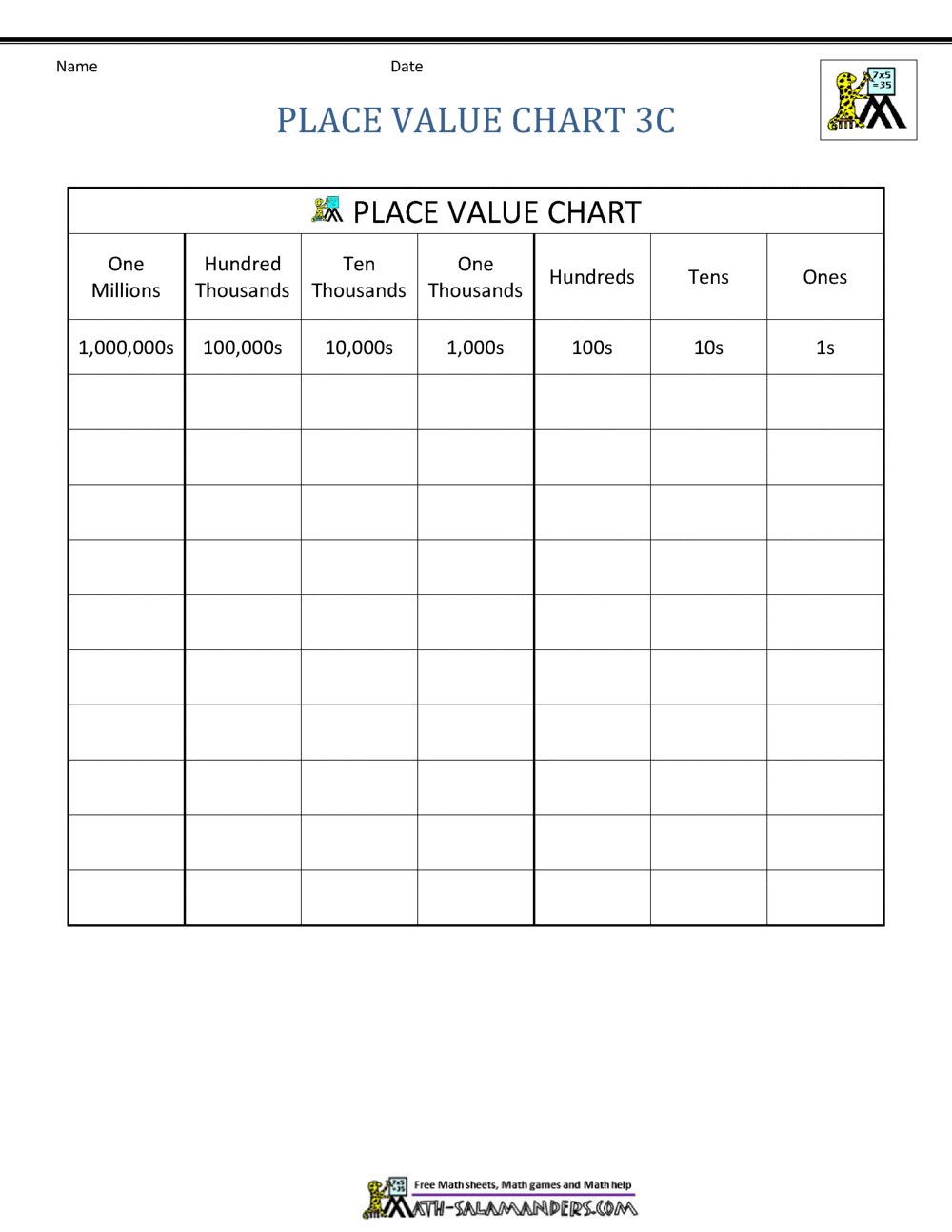
Place Value Charts
Understanding Place Value Charts
A place value chart is a table or grid that shows the place value of each digit in a number. It typically consists of columns and rows, with each column representing a place value, such as ones, tens, hundreds, and thousands. The rows represent the digits of a number, with each digit placed in the corresponding column based on its place value. By using a place value chart, students can easily see the relationship between numbers and their digits, which helps them to understand mathematical concepts more effectively.
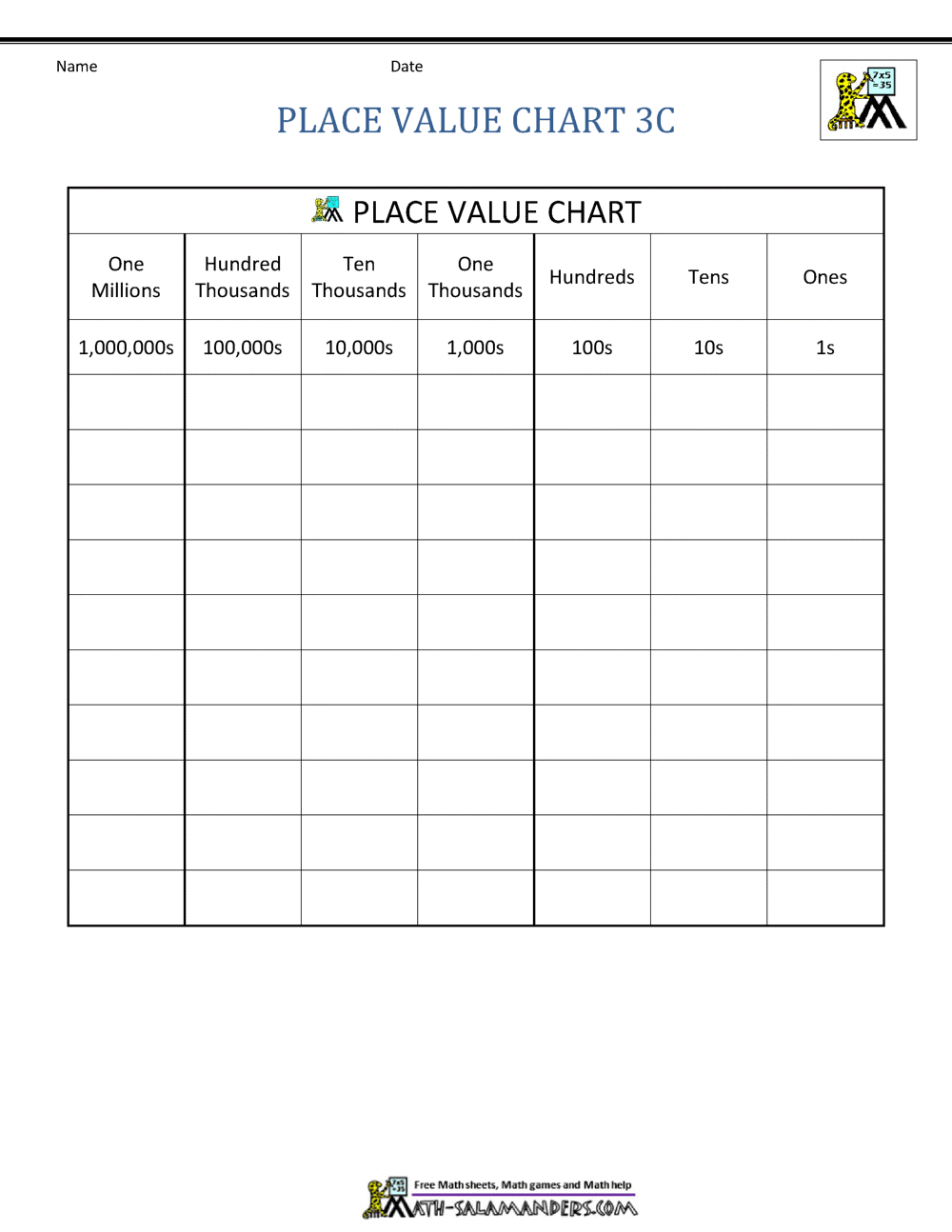
Place Value Charts
Benefits of Using Place Value Charts
The benefits of using place value charts in elementary education are numerous. For one, they provide a visual representation of the place value system, which helps students to understand the concept more clearly. They also help students to identify the place value of each digit in a number, which is essential for performing mathematical operations. Additionally, place value charts can help students to develop problem-solving skills and critical thinking, as they learn to apply the concept of place value to real-world problems.
Creating a Place Value Chart for Elementary Students
Creating a place value chart for elementary students is relatively simple. Teachers can use a variety of materials, including paper, pencils, and markers, to create a chart that is tailored to the needs of their students. The chart should include columns and rows, with each column representing a place value and each row representing the digits of a number. Teachers can also use visual aids, such as blocks or base-ten blocks, to help students understand the concept of place value more effectively.
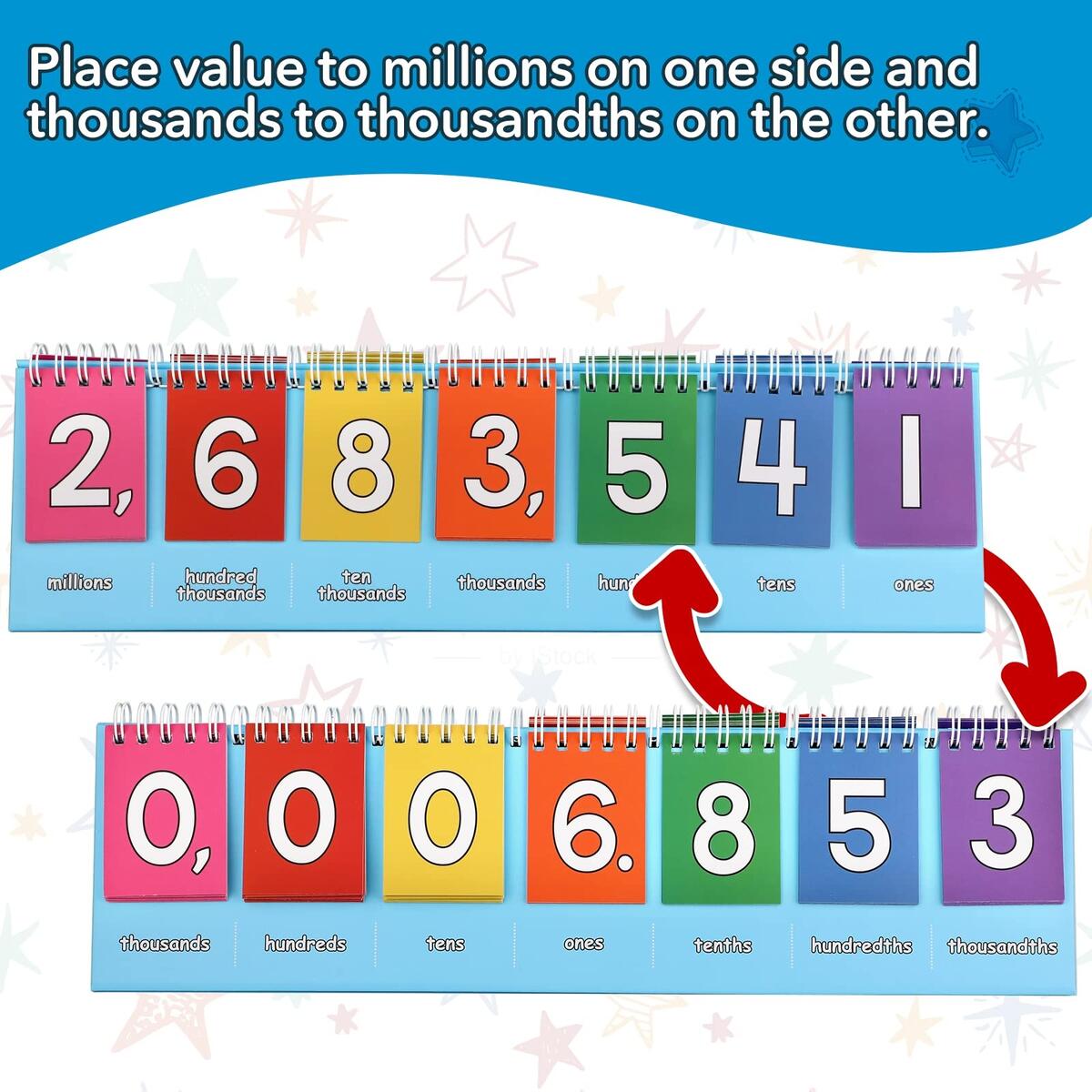
Amazon Aizweb Place Value Flip Chart Math Manipulatives K 3 For Elementary Classroom Double Sided With Whole Numbers And Decimals Learn To Count By Ones Tens Hundreds Thousands And Millions 7 Digits Office Products
In conclusion, place value charts are a valuable tool for teaching students about the concept of place value in elementary school. By providing a visual representation of the place value system, these charts help students to understand the relationship between numbers and their digits more clearly. With the benefits of using place value charts and the ease of creating them, it is no wonder that they have become a staple in elementary education.
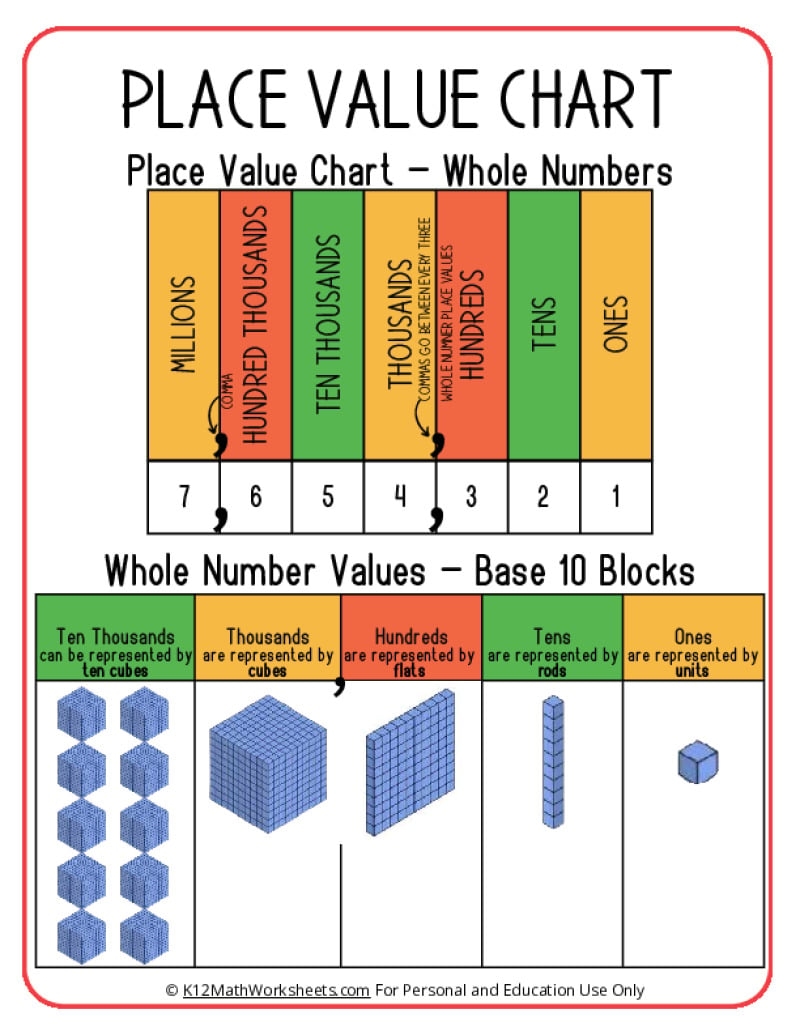
Place Value Charts K12 Math Worksheets
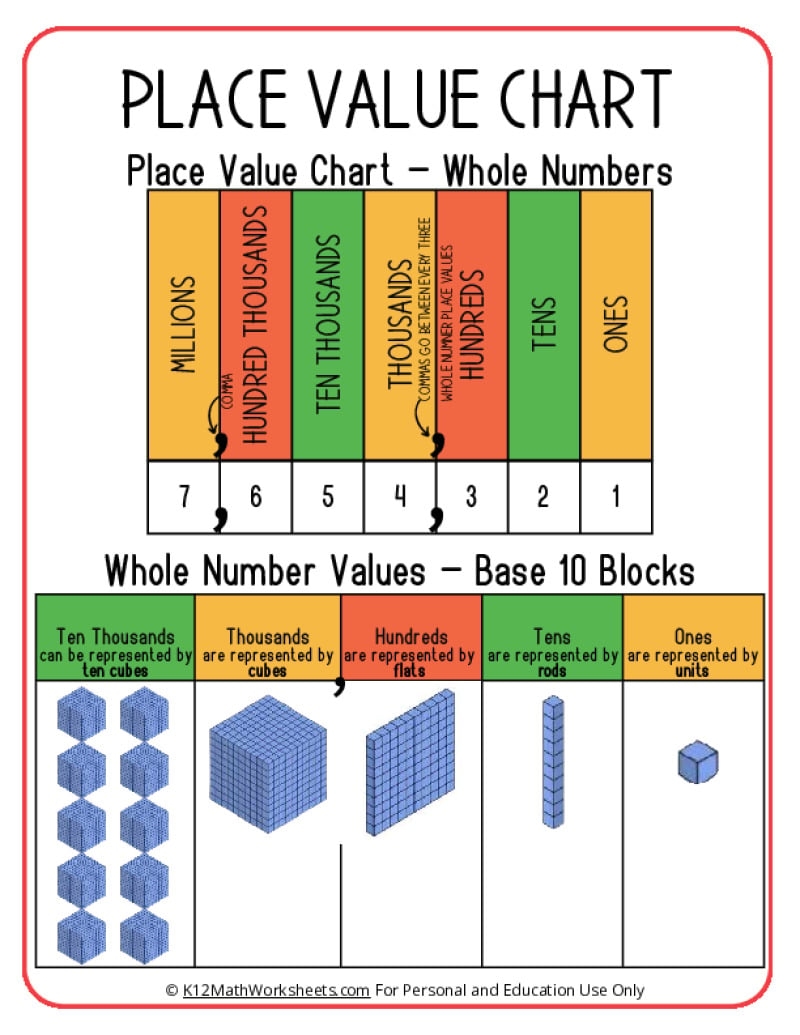
Place Value Charts K12 Math Worksheets