As students progress to higher grades, they are introduced to more complex mathematical concepts that build upon the foundational skills they acquired in earlier years. One such crucial concept is place value, which is essential for understanding and working with numbers. For grade 6 students, grasping the concept of place value is vital as it forms the basis for more advanced math topics such as decimals, fractions, and algebra. A place value chart is a tool that can significantly aid in this learning process.
The place value system is based on the idea that each digit in a number has a place or position that determines its value. Starting from the right, each place represents a power of 10, with the places valued at 1, 10, 100, and so on. Understanding this concept is crucial for performing arithmetic operations such as addition, subtraction, multiplication, and division. Moreover, it helps in comparing and ordering numbers, which is a fundamental skill in mathematics. A place value chart for grade 6 students is designed to help them visualize and understand the relationship between digits and their respective place values.
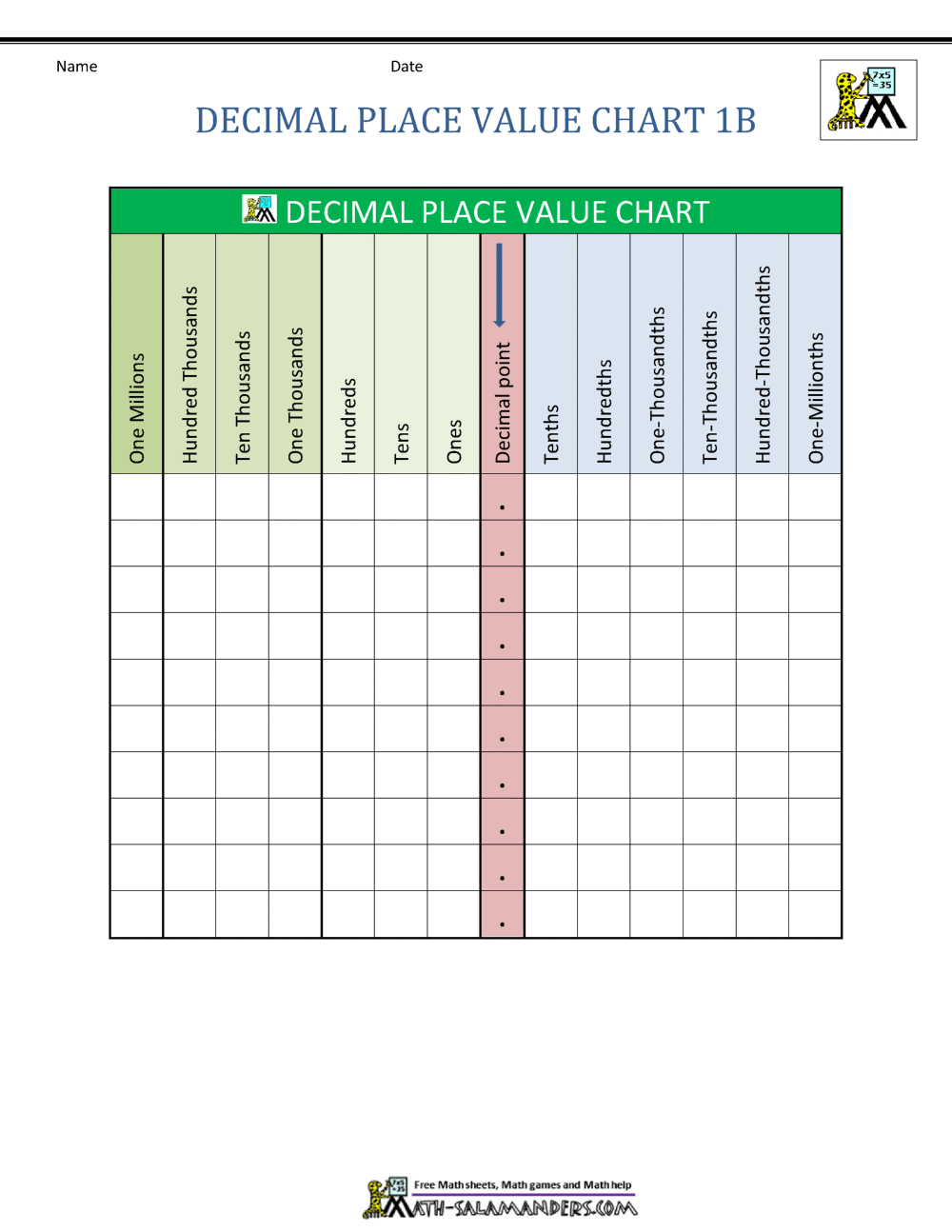
Decimal Place Value Chart
Understanding Place Value
Understanding place value is the first step towards mastering it. The concept of place value is not just about memorizing the names of the places but also about comprehending how each digit contributes to the overall value of a number. For instance, in the number 456, the 4 is in the hundreds place, the 5 is in the tens place, and the 6 is in the ones place. Each of these digits has a specific value based on its position, and when combined, they give the total value of the number. A place value chart helps students see this relationship clearly and understand how to calculate the value of each digit within a number.
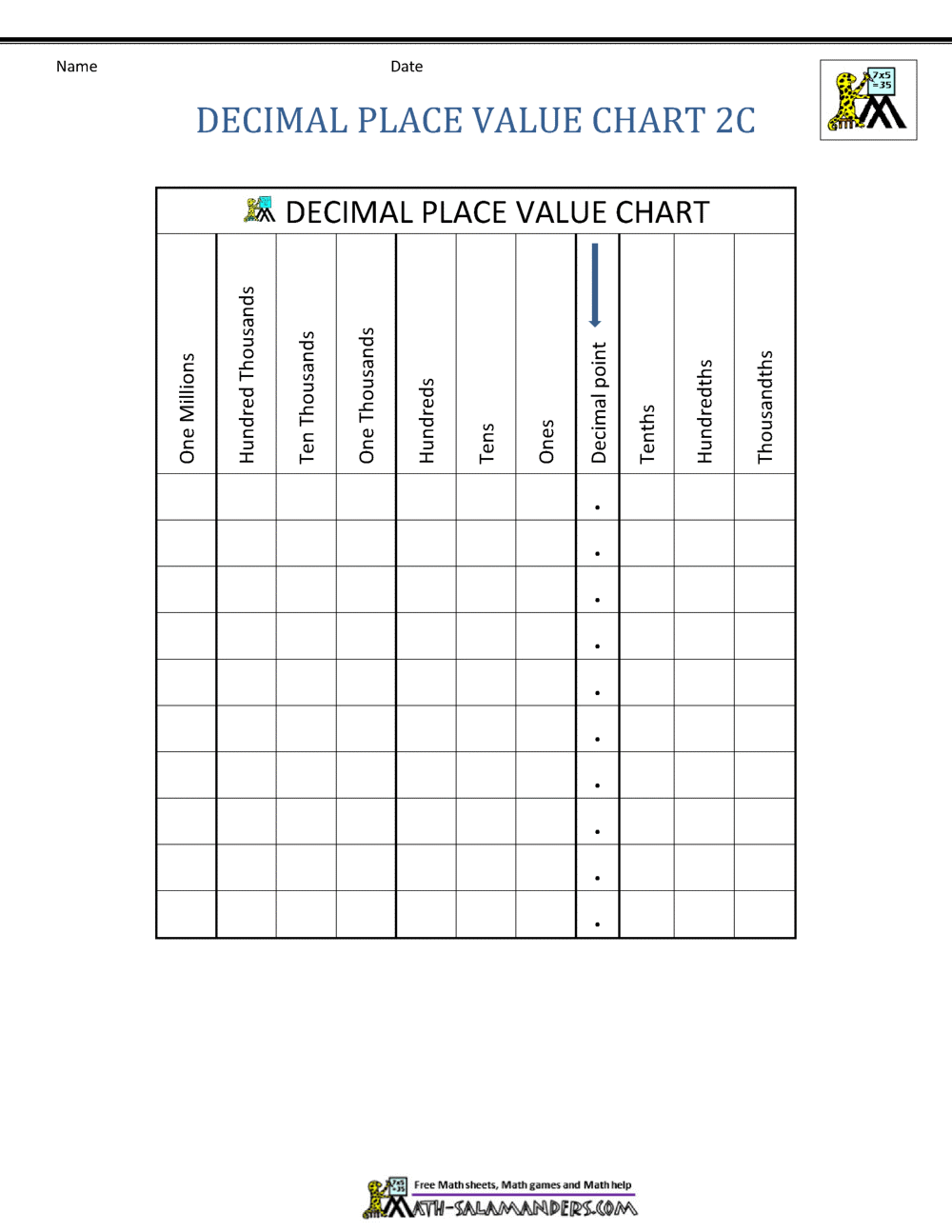
Decimal Place Value Chart
Creating a Place Value Chart
Creating a place value chart is a straightforward process that can be tailored to the needs of grade 6 students. The chart typically consists of columns representing the different places (ones, tens, hundreds, thousands, etc.) and rows for writing numbers. Students can fill in the chart with numbers and then identify the place value of each digit. This visual representation makes it easier for students to understand and work with numbers, especially when performing arithmetic operations. Teachers and parents can create these charts on paper or use digital tools for a more interactive experience.
Practical Applications of Place Value Charts
The practical applications of place value charts are numerous and significant. They help students develop a deeper understanding of the number system and enhance their ability to perform mathematical operations accurately. Place value charts are also useful for teaching concepts such as rounding numbers, estimating quantities, and solving word problems. By using a place value chart, students can visualize how numbers are structured and relate to each other, which is essential for advanced math topics. Furthermore, understanding place value helps in real-world applications, such as finance, science, and engineering, where numbers and their values are critical.
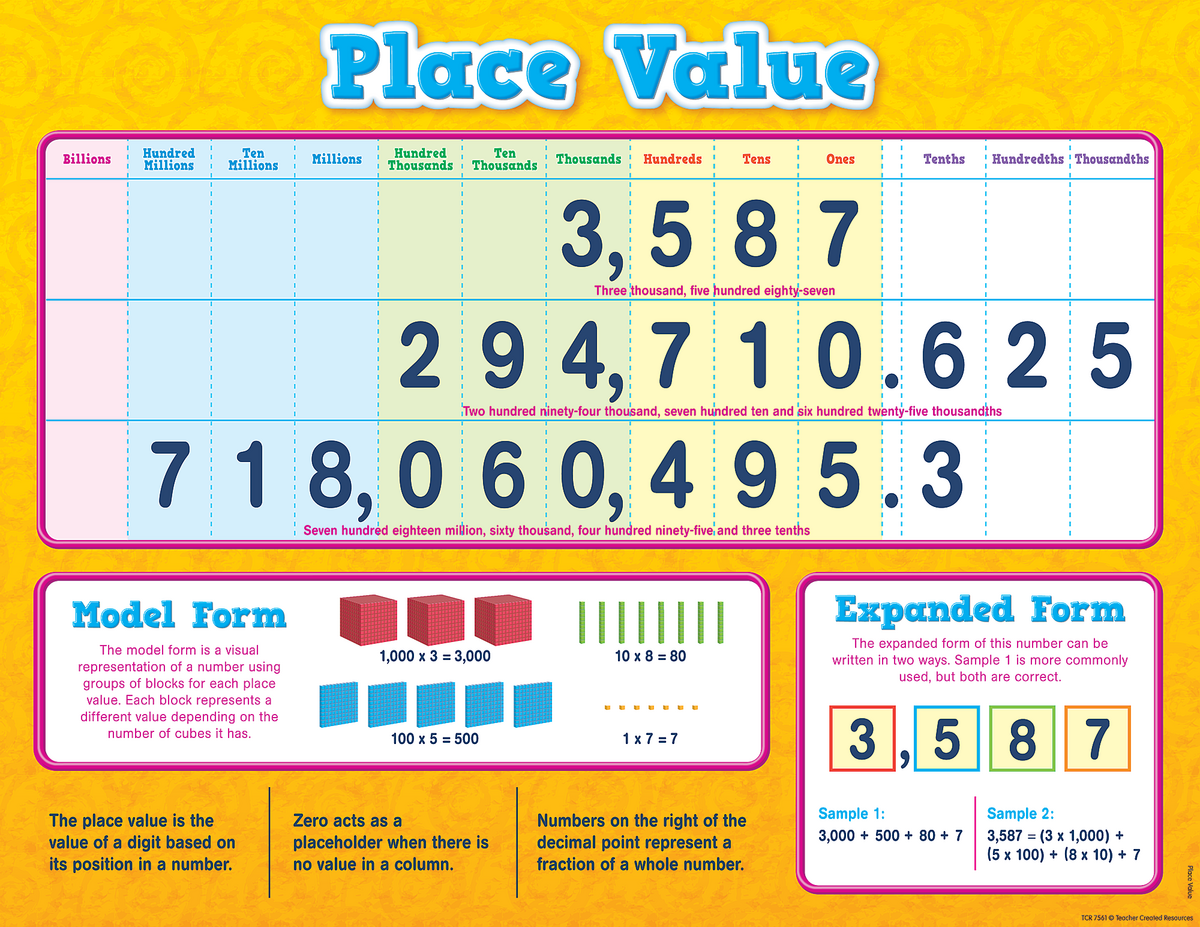
Place Value Chart TCR7561 Teacher Created Resources
In conclusion, a place value chart is an indispensable tool for grade 6 students learning about place value. It provides a clear and visual method for understanding how numbers are structured and how each digit contributes to the overall value. By mastering the concept of place value with the aid of a place value chart, students can improve their math skills, build a strong foundation for more complex math topics, and develop problem-solving abilities that will benefit them in all areas of study and beyond.
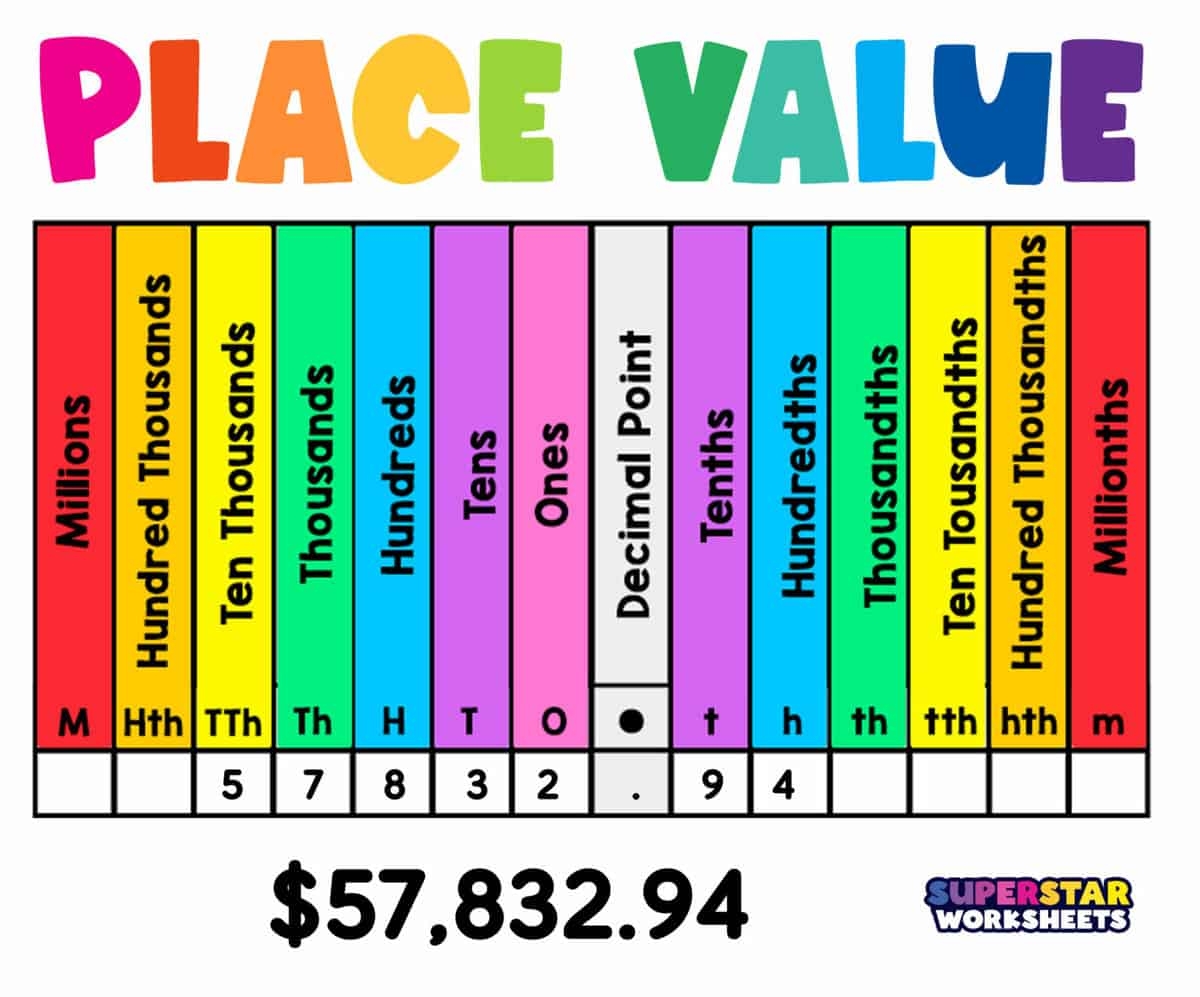
Place Value Superstar Worksheets
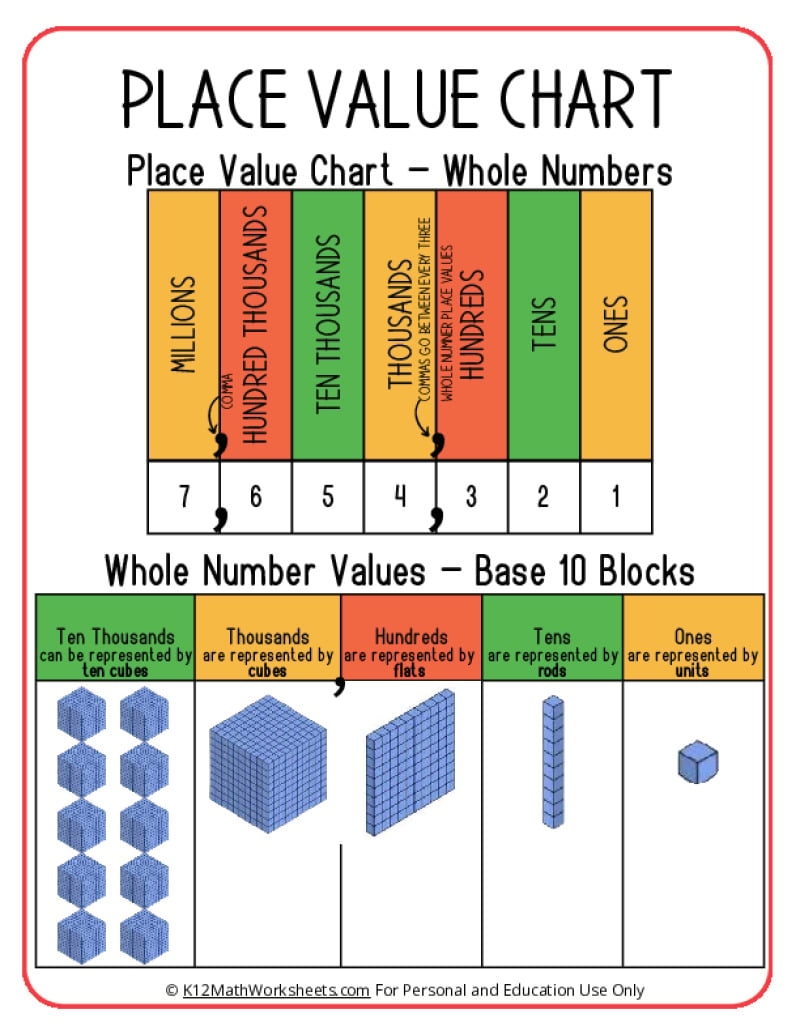
Place Value Charts K12 Math Worksheets